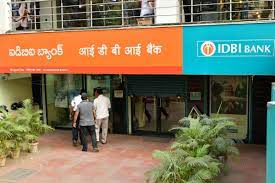
The United Forum of IDBI Officers and Employees (UFIOE) has urged the Reserve Bank of India (RBI) to withhold regulatory approval for the proposed sale of IDBI Bank to Fairfax Financial Holdings until every issue has been “independently examined” and “satisfactorily resolved”.
The issues outlined by the UFIOE include the valuation of the deal, the source of acquisition funds, depositor protection, credentials of the proposed acquirer and conflict of interest.
In a letter to the RBI Governor, the union, representing two organisations of IDBI officers and employees, further urged the regulator to advise the government and Life Insurance Corporation (LIC) to abandon the proposed divestment.
Stating the concerns in the letter dated 15 November, the union said the transfer of management control to a foreign entity would be detrimental to the “wider interest of all stakeholders, banking, the economy and the nation”.
Buyer’s credentials to run a large bank
The union questioned Fairfax’s ability to manage a large bank as its core business and expertise lie in the insurance sector rather than banking. The exposure to banking is limited to its association with CSB Bank, which is a relatively small private sector bank.
“Its track record in managing a large, complex banking institution of the scale and systemic importance of IDBI Bank remains limited,” it said.
Citing delays in implementing industry (IBA) wage revisions for CSB employees for nearly nine years, the union raised “serious concerns regarding employee welfare and stakeholder trust”.
Source for funding acquisition
The union questioned how Fairfax would fund the proposed acquisition, involving a consideration of Rs 52,878 crore. It alleged that the buyer could be seeking to mobilise funds by selling its other group shareholdings to IDBI Bank at market price.
“That means IDBI Bank sale will be funded by IDBI Bank itself,” it stated and asked the RBI to independently verify the “precise source” and ownership of every rupee used for the acquisition.
“It must also ensure that the consideration is not directly or indirectly financed, secured, reimbursed or supported by IDBI Bank’s deposits, assets, capital, guarantees, future cash flows or lending arrangements,” the union said in its letter.
Ownership structure
The union also sought close scrutiny of possible contributions and transfers involving group entities such as IIFL Finance and Digit Insurance.
“The RBI should examine whether such arrangements alter the real economics of the acquisition, create conflicts of interest, obscure the ultimate beneficial ownership or introduce risks through complex related-party relationships,” it said.
The regulator must assess the consolidated financial position of the proposed acquirer and all relevant group entities, including leverage, contingent liabilities, encumbrances, cross-holdings, governance record and the ability to provide sustained capital support to IDBI Bank without recourse to the bank itself, it added.
Conflict of interest as promoter status in CSB Bank
Fairfax’s existing 40% equity ownership in CSB Bank and its proposed control of IDBI Bank could create concentration, connected exposure and governance concerns, the union said.
Under the RBI Master Directions on Ownership in Private Sector Banks, a single promoter group is restricted from promoting or exercising "controlling interest" across multiple competing banking entities.
“As long as Fairfax holds promoter status in CSB Bank, the RBI should not give final approval to Fairfax Financial Holdings to acquire any amount of shareholding in IDBI Bank,” the letter said.
Valuation irregularities
Comparing Emirates NBD’s 60% acquisition of RBL Bank for Rs 26,016 crore, the union claimed that the minimum value of 60% of IDBI Bank should fetch Rs 1,07,102 crore.
The 4.2 times higher value is based on the two banks’ relative net worth as of 31 March 2026, with IDBI Bank being at Rs 67,637 crore and RBL Bank at Rs 16,430 crore.
The union alleged a valuation mismatch of Rs 54,224 crore.
It also questioned the valuation of the bank’s properties, citing the Gachibowli property in Hyderabad. According to the union, the market value of this property alone is worth Rs 14,500 crore (50 acres at Rs 290 crore per acre, as per the latest public e-auction done by the Telangana government).
“The 2,000 properties owned by IDBI Bank are valued at just Rs 8,881 crore as per the lender’s annual report as on 31 March 2026. All these mismatches are raising serious concerns about the valuations,” the union said.
Drawing a comparison on the standalone net profit for FY26, the union said IDBI Bank at Rs 9,513 crore is 11.57 times higher than that of RBL Bank’s Rs 822 crore for the fiscal.
The sum of IDBI Bank’s net profit for the last six financial years (2020-21 to 2025-26) at Rs 30,105 crore is 7.52 times that of RBL Bank’s Rs 4,001 crore during the same period, the union said.
Even in terms of net non-performing asset (NPA), capital adequacy ratio and provision coverage ratio, the union said the parameters of IDBI Bank are superior to those of RBL Bank.
Lack of transparency
The union questioned the revision of the government’s reserve price from Rs 94.42 to Rs 75.99 per share after the highest bid offer was Rs 75, alleging that the “entire process is suspicious”.
It demanded that in the proposed sale, the full details of all bidders, advisors, valuation agencies and the draft share purchase agreement (SPA) should be disclosed publicly and made transparent.
Depositor interest
IDBI Bank had deposits of Rs 3.56 lakh crore as on 30 September 2026, serving individuals, pensioners, workers, farmers, small enterprises and communities that depend upon accessible and accountable banking.
The union warned that a change in control and foreign ownership may lead to branch rationalisation, higher charges, altered lending priorities or reduced attention to less profitable regions and customer groups. These consequences require an independent public-interest assessment, not merely a transactional review.
The proposed transfer of control of a major Indian bank to a foreign-controlled financial conglomerate also raises questions of financial sovereignty, data governance, credit allocation, crisis support and
the long-term alignment of the institution with national development priorities.
It also raised concerns over the withdrawal of government and LIC nominee directors from the bank’s board after the acquisition of the bank.
As on date, one government nominee director and one LIC nominee director are present on the bank’s board.
Parliamentary assurance deviated
In December 2003, Parliament was assured that government shareholding in IDBI Bank would not fall below 51% and its public-sector status would be maintained, despite the erstwhile development financial institution (DFI) being converted into a bank.
The proposed transfer of management control raises a serious question of parliamentary accountability, the union said.
LIC policyholders stand to lose
In January 2019, LIC infused around Rs 21,624 crore to acquire a 51% stake in IDBI Bank at the behest of the government. This deviated from the general rule of a 15% maximum shareholding in any company.
Regulator IRDAI (Insurance Regulatory and Development Authority of India) granted LIC in July 2018 a special approval, allowing the insurance behemoth to go beyond the 15% shareholding limit to 51% in IDBI Bank. This was subject to a condition that LIC would ensure that the interests of policyholders be safeguarded and returns from the investment be maximised.
After a long gap of eight years, LIC policyholders deserved a minimum return of Rs 122 per share (double that of Rs 61), the union said.
However, the proposed sale of 30.24% out of its present holding of 49.24% in IDBI Bank at the rate of Rs 81 is working out to be a return of less than 4% per annum, which is a great loss to the policyholder and a blatant violation of the approval given by IRDAI, it added.
Vested interests
Amitabh Kant (former NITI Aayog CEO), Gurumoorthy Mahalingam (former executive director at the RBI) and BP Kanungo (former RBI Deputy Governor) held key positions in public power and public institutions during the proposed sale process from 2021 to 2026.
They were later associated with Fairfax’s group companies, with Kant appointed as a senior advisor in June 2025; Mahalingam inducted as a board member of Thomas Cook India (a subsidiary controlled by Fairfax) in December 2025 while serving as an independent director at LIC; and Kanungo put in the board of IIFL Finance (where Fairfax holds a major stake) as an independent director in June 2025.
The union urged the RBI to review potential conflicts of interest involving Kant, Mahalingam and Kanungo before granting final “fit-and-proper” regulatory clearance for Fairfax’s acquisition of IDBI Bank.
Acquisition against job security
The union also warned that the takeover by a foreign company could affect job security, service conditions, promotions, retirement benefits and reservation policies, as was seen after Fairfax’s acquisition of Catholic Syrian Bank (CSB) in 2018.
In 2019, Fairfax Financial Holdings withdrew the mandate already given by CSB to the IBA (Indian Banks' Association) for industry-level wage revisions. A similar hard line was followed during the two industry-level wage revisions, first on 11 November 2020 and then on 8 March 2024.
Bank’s turnaround
After sinking into losses, the bank has returned to profitability with the support of its staff and capital infusion by LIC and the government. “The transfer of control of IDBI Bank at this stage risks socialising the cost of revival while privatising the future gains,” the union said.